Selling on Amazon from New Zealand: Setup, fees and strategies
Discover how to start selling on Amazon from New Zealand. We explain the setup process, FBA vs FBM, seller fees, tax rules and managing Amazon payouts.


Kiwis love online shopping – we’re expected to spend NZ$17.6 billion online by 2028.1 While some punters prefer POLi¹⁰, the e-commerce entrepreneur must also accept card and digital wallet payments to succeed.
To do that, you’re going to need a payment gateway. Some suit certain business models better than others, so it’s worth doing some research before signing up.
In this post, we’re comparing the top payment gateway providers in New Zealand.
| Table of Contents |
|---|


A payment gateway is like an online EFTPOS machine, acting as a go-between for banks and card schemes when processing card payments.
The ‘payment gateway provider’ is the company managing the gateway. As they’re inherently complex, virtually all SMBs outsource payment gateways to third-party providers.
The customer enters card or digital wallet details into a secure portal. The gateway then encrypts that data and communicates with the relevant parties to verify and approve the transaction.
Good payment gateways use numerous security measures to stay compliant and protect against fraud, making them one of the safest ways to accept online payments.
Many payment gateway providers also operate as Payment Service Providers (PSPs), offering gateways as part of a broader suite of fintech services.¹¹
Here are 7 great payment gateway providers that cater to businesses with different requirements.
| Provider | NZ pricing | Best for |
|---|---|---|
| Stripe2 | Per-transaction fees | Online and in-store payments |
| Eway3 | Subscription + per-transaction fees | Businesses with an existing bank merchant account |
| Windcave4 | Custom quote | Established e-commerce stores requiring multiple payment methods and e-commerce integrations |
| Flo2Cash6 | Custom quote | Large businesses and nonprofits requiring branded payment pages |
| PayPal7 | Per-transaction fees | Start-ups and businesses requiring a trusted payment method |
| EFTPOS NZ⁸ | Subscription + per-transaction fees | Businesses taking a mix of online and MOTO (over-the-phone) payments |
| Paystation⁹ | Subscription + per-transaction fees (after fee-free allowance) | Businesses scaling through different tiers |
Stripe2 is a large multinational PSP operating in numerous countries, including New Zealand. One of its many fintech services is an online payment gateway.
Stripe is a popular choice for budding entrepreneurs who want to start trading ASAP with minimal paperwork. Setup is fast and easy, with no extensive vetting process or start-up fees.
Stripe offers 24/7 support as well as technical support via Discord, plus documentation guides and an average historical uptime of 99.999%. The regulated, PCI-compliant provider uses like-for-like settlements for predictable payouts.
Built-in fraud prevention tools, such as AI-powered analytics, help detect anomalies in real time, and Stripe includes checkout optimisation tools.
Monthly subscription Stripe fees only apply to advanced services, not the standard payment gateway.
Eway3 offers a payment gateway for Kiwi businesses that already hold a merchant account with a local New Zealand business bank.
The Eway and merchant account combo could help businesses achieve faster settlement times, which might alleviate cash flow issues. Due to lower per-transaction fees, bank-held merchant accounts can also reduce processing costs for high-volume businesses.
Eway provides a dedicated customer service team, including 24/7 technical support. End users can choose from various payment options, from major, well-known card schemes like Visa and Mastercard to more obscure networks.
Eway has a simple fee structure with no hidden costs. All plans are billed annually.
A homegrown success story, Windcave4 has expanded to employ 400+ workers in 40+ countries since being founded here in New Zealand back in 1999.
As a world leader in PCI-DSS-compliant payment gateway solutions, Windcave integrates with over 200 e-commerce platforms to create a seamless checkout experience.
Windcave specialises in accepting additional or alternative payment methods, such as Account2Account, ACH, Interac Online, PayPal, UnionPay, and WeChat Pay. This broad range could make it useful in foreign markets that prefer non-card-based payments.
A simple interface lets users easily configure customisable checkouts. Businesses can create Hosted Payment Pages and send links via email, SMS, and messaging apps to customers worldwide. Globally supported APIs may reduce development and implementation timeframes.5
Well-established businesses and nonprofits seeking greater branding control might like Flo2Cash6.
Designed to ‘acquire, convert, and retain’ customers, the payment gateway offers high-level customisations for recurring and one-off payments, tailored brand-aligned receipts, and optional social media or ‘thank-you’ message links.
Flo2Cash team members design customised payment pages based on your specifications. Therefore, start-up costs may be higher than other payment gateway models.
On the plus side, implementation is fast and doesn’t require in-house tech expertise. No-code branded pages take less than 10 business days to go live.
Businesses can edit layouts through a simple drag-and-drop builder and perform split tests to see which configurations perform best. Flo2Cash integrates with several well-known CRMs and accounting apps.
Flo2Cash is certified to PCI DSS v4.0 as a Level 1 Service Provider and has ISO27001 certification. Users can access all features from one unified platform, including reporting, reconciling, and payment collection.
PayPal is an online payment platform that’s been around for decades. The multinational offers online payment gateways and other services in numerous countries, including New Zealand, through PayPal Business.
Its longevity and famous Buyer Protection program¹² have made PayPal a trusted name among shoppers in New Zealand and abroad.
That solid, widely recognised reputation can help businesses build customer trust. Some businesses use PayPal to accept payments from overseas buyers who may be hesitant to pay unfamiliar suppliers or use new payment methods.
PayPal has low paperwork requirements and no start-up or monthly fees¹³, which can potentially appeal to entrepreneurs looking to launch a business quickly and cheaply.
However, the standard PayPal Business per-transaction fees for accepting card payments tend to be higher than other payment gateways7.
PayPal Braintree¹⁴ is the company’s enterprise-level payment gateway designed for bigger businesses and high-growth start-ups.
If your business has higher volumes or more complex branding and checkout requirements, Braintree might be a better fit than PayPal Business.
Kiwi businesses that accept online and over-the-phone card payments might prefer a platform that offers both services through one dashboard.
EFTPOS NZ⁸ has a ‘Bundle Offer’ subscription that includes a Verifone hosted checkout page and a virtual terminal for Mail Order / Telephone Order (MOTO) transactions¹⁵. Users get 100 free transactions per month, then pay a subsequent $0.20 per-transaction fee.
EFTPOS NZ has no setup fee, fixed-term contracts, or limits on the number of users. Other packages are available but don’t include hosted payment gateways.
You will need to BYO bank merchant account and factor in those start-up and processing fees.
Paystation⁹ is a locally operated payment gateway provider with multiple subscription tiers catering to businesses at various stages of growth.
The more a business pays per month, the more free transactions it receives and the lower the per-transaction fees. That flexible pricing model can potentially scale with your business.
All plans include the fundamentals: tokenisation, fast batch processing up to 30+ transactions per second, 15+ supported currencies, New Zealand business banks and global payment merchant integrations, customisable cash flow reporting, Level 1 PCI compliance, and customer support.
Every business has unique needs when accepting online card and digital wallet payments. Consider the following when comparing providers.

Payment gateway fees fall into 5 main types.
Expanding a business globally opens up exciting opportunities, but also new challenges like receiving payments across borders. Hidden foreign transaction fees and hefty currency conversions involved with international payments can eat into your profits and time.
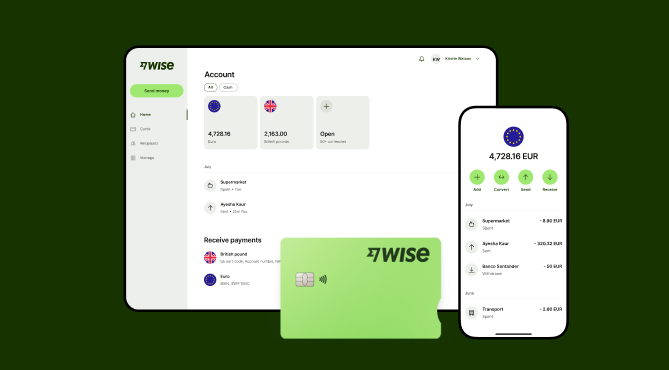
Wise Business serves as a cost-effective solution where you can receive money from around the world at the speed and price of local payments.
Transform the way you receive payments with Wise Business:
Sign up for the Wise Business account! 🚀
This is not financial or investment advice - Wise has not taken into account your objectives, financial circumstances or needs and you should consider if it is appropriate for you.
1. What is the difference between a gateway, processor and PSP?
A payment gateway is the online portal used to accept card and digital wallet payments, while the PSP/processor is the company providing this service.
2. What happens if a customer makes a chargeback?
When a customer files a chargeback, their bank will generally reverse the payment and withdraw the funds directly from the business’ account.
3. Can a payment gateway pay out to Wise Business?
Yes. A payment gateway can pay out directly to Wise Business. All you need to do is provide the correct account details.
*Please see terms of use and product availability for your region or visit Wise fees and pricing for the most up to date pricing and fee information.
This publication is provided for general information purposes and does not constitute legal, tax or other professional advice from Wise Payments Limited or its subsidiaries and its affiliates, and it is not intended as a substitute for obtaining advice from a financial advisor or any other professional.
We make no representations, warranties or guarantees, whether expressed or implied, that the content in the publication is accurate, complete or up to date.

Discover how to start selling on Amazon from New Zealand. We explain the setup process, FBA vs FBM, seller fees, tax rules and managing Amazon payouts.

Looking for the best corporate cards for your New Zealand-based business? We’re covering a few choice options in this business card comparison article.

We’re covering everything the Kiwi business owner needs to know about EFT payments, from definitions to benefits, types, and challenges.

We’re covering how to accept online payments to help Kiwi entrepreneurs mitigate risks, build trust, and expand their e-commerce stores.